
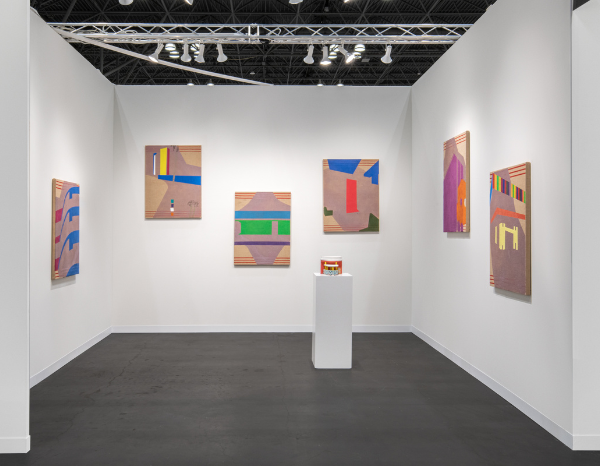
Shezad Dawood | ‘Integrations’ series
This body of work consists of paintings on jute, each an abstract portrait of a particular project for the built environment but titled as a portrait of the architect(s) who designed them.
Read More This body of work consists of paintings on jute, each an abstract portrait of a particular project for the built environment but titled as a portrait of the architect(s) who designed them.
Read More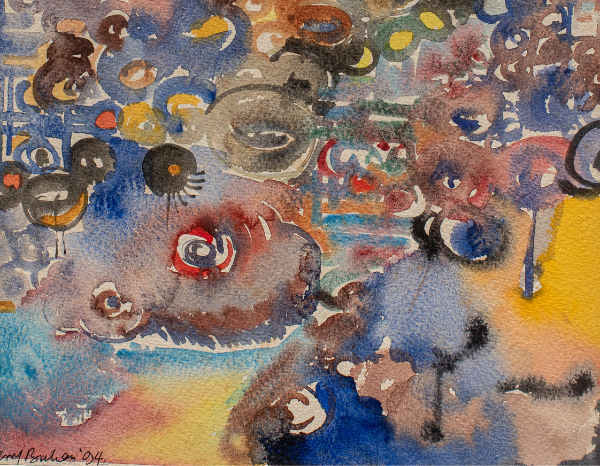
Spanning over two decades and following a loose chronological order from 1993 to the present, the exhibition presented over seventy works characterising the artist’s engagement with abstract, symbolic, and thematic themes, and more importantly, his heartbeat for Nigeria.
Read More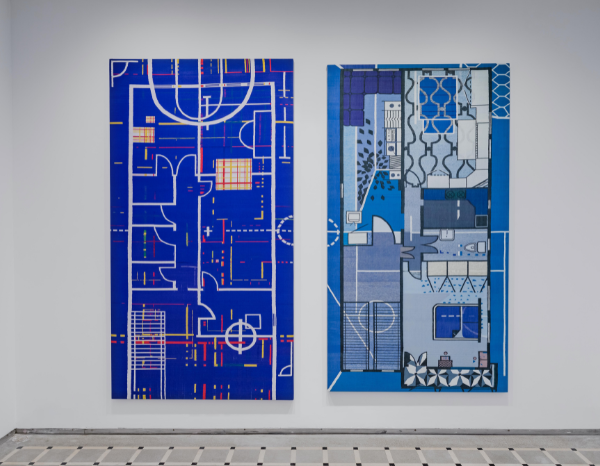
Acutely erudite in music and equally conversant in literature, politics, philosophy and history, he was an artist who could lead the viewer to enter his work from different points of view.
Read More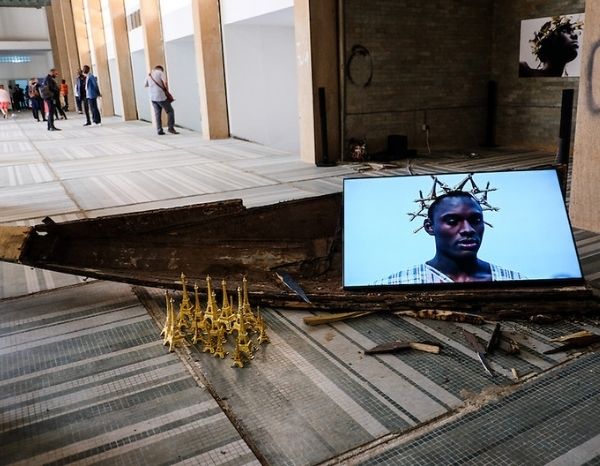
The title for Dak’Art 2016 ‘The City in the Blue Daylight’ was taken from a poem by Leopold Sedar Senghor, specifically the line, ‘Your voice tells us about the Republic that we shall erect the City in the Blue Daylight In the equality of sister nations. And we, we answer: Presents, Ô Guélowâr!’
Read More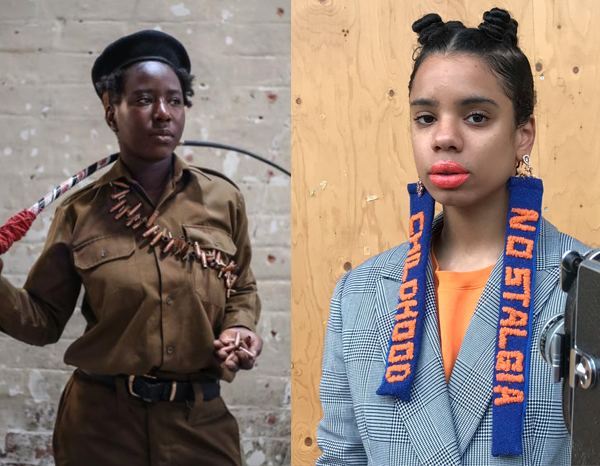
What began as an intended dialogue between Angolan artist Sandra Poulson and South African artist of Angolan heritage, Helena Uambembe, evolved into a reflection on the nature of self-censorship by the latter. Both artists are concerned with the idea of the archive, what it is, and who authors it, addressing the gaps in the way the history of Angolans has been represented both in Angola and other parts of southern Africa.
Read More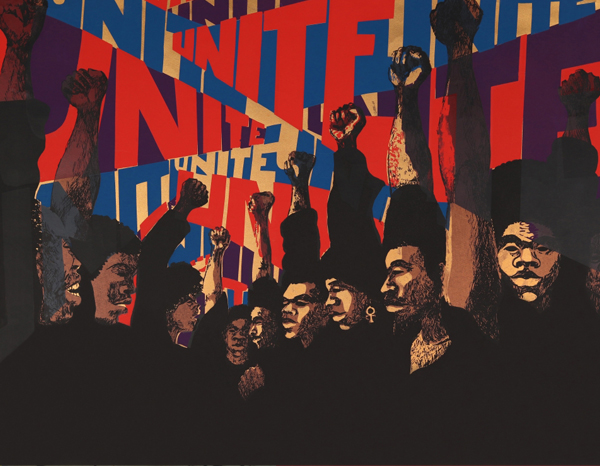
Soul of a Nation: Art in the Age of Black Power was first presented at Tate Modern in 2017, travelling to venues in the US for the next two years. The exhibition text explains the very decisive timeline, with the show opening in 1963, “at the height of the Civil Rights movement and its dreams of integration”.
Read More
One of the core interests of documenta 14, which took place in 2017, was the cause of decentralising and decolonising the northwestern canon. The concept was announced by Artistic Director Adam Szymczyk in 2012. One of the most surprising and controversial aspects, perhaps, of Szymczyk’s announcement, was that documenta 14 would take place in equal parts ac ross the cities of Kassel and Athens under the slogan “Learning from Athens”.
Read More
Art and China after 1989 presented work by 71 key artists and groups active across China and worldwide whose critical provocations aim to forge reality free from ideology, to establish the individual apart from the collective, and to define contemporary Chinese experience in universal terms.
Read More
Curated by Christine Tohme, the biennial featured over fifty international artists. The five parts of SB13 were an online depository of research material, four projects curated by four Interlocutors outside of the UAE, a year-long education programme in Sharjah, a year-long online publishing platform and a public programme in two parts.
Read More
The 32nd Bienal de São Paulo, INCERTEZA VIVA (Live Uncertainty), in 2016 proposed to look at notions of uncertainty and the strategies offered by contemporary art to embrace or inhabit it.
Read More
For the 2016 edition of the EVA International Biennale in Limerick, curator Koyo Kouoh presented Still (the) Barbarians, reminding readers of the catalogue that Ireland is “the first and foremost colonial laboratory of the British enterprise.”
Read More
Afro Modern: Journeys through the Black Atlantic took place at the Tate Liverpool in 2010 and was ultimately inspired by Paul Gilroy’s seminal book The Black Atlantic: Modernity and Double Consciousness (1993). As the organisers described it, the exhibition identified a hybrid culture that spans the Atlantic, connecting Africa, North and South America, The Caribbean and Europe.
Read More
Documenta11 in 2002 was led by the first non-European art director – Nigerian-born Okwui Enwezor – who created what is remembered as a foundational global and postcolonial edition of this seminal event in Kassel, Germany. This iteration of documenta rested on five platforms that aimed to “describe the present location of culture and its interfaces with other complex, global knowledge systems,” Enwezor explained, with documeta 11 being the 5th and final in this series of platforms.
Read More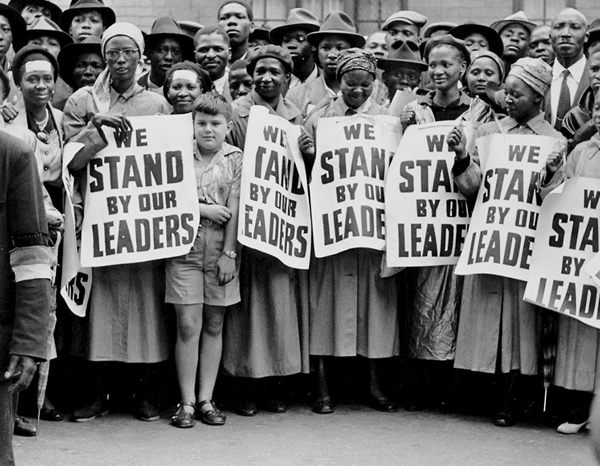
The Short Century: Independence and Liberation Movements in Africa, 1945–1994, was a landmark exhibition exploring the confluence of African culture and independence through art, film, photography, graphics, architecture, music, literature, and theatre. Featuring works by more than 50 artists from 22 countries, the exhibition was notably extensive, occupying the entire three floors of MoMA P.S.1 in New York City.
Read More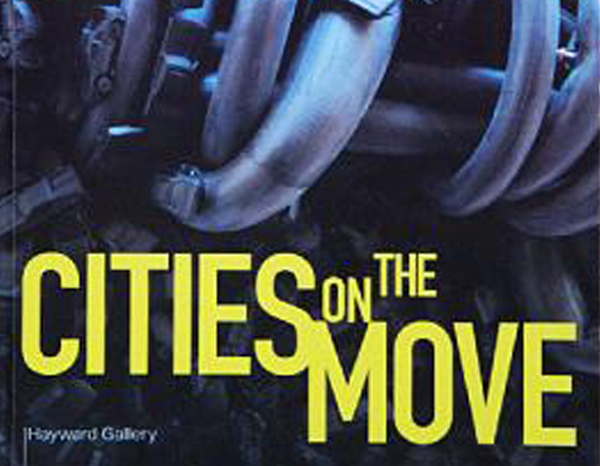
Cities on the Move was a seminal traveling exhibition curated by Hans Ulrich Obrist and Hou Hanru. The exhibition toured to multiple locations from 1997 to 1999, exploring the cultural influence of East Asia’s meteoric urban development in the late twentieth century through the lens of visual art, architecture, and film.
Read More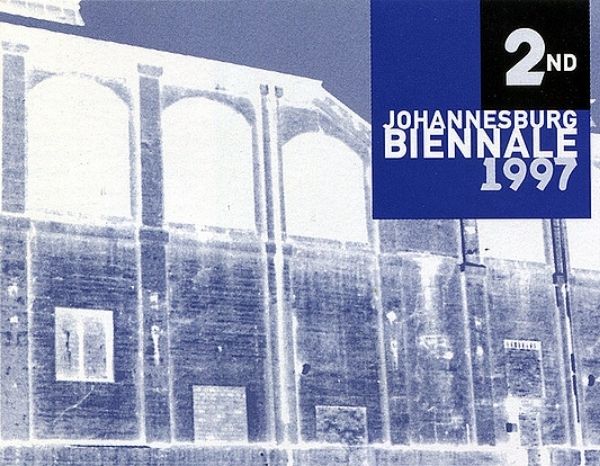
The 2nd and final Johannesburg Biennale took place in 1997 under the artistic direction of Okwui Enwezor, who at the time had been appointed as the curator at the Art Institute of Chicago. The biennale differed in structure to its 1995 predecessor. It was composed of a series of exhibitions with 6 international curators.
Read More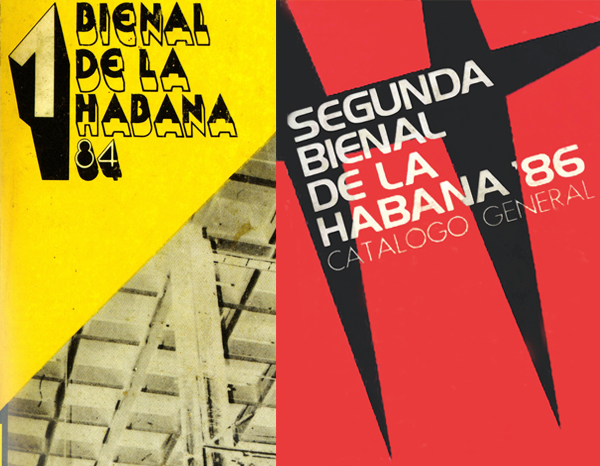
The Bienal de la Habana, when first established in 1984 offered a singular and crucial meeting place for art from the region, exhibiting artists solely from Latin America and the Caribbean. In the second edition in 1986, the Bienal included art from Africa, Asia and the Middle East, becoming one of the most important platforms for artists from outside the West.
Read More